
BEARD-SKIN EDUCATION · LASER PERFECT
Ingrown Hairs & Razor Bumps in Ilford
Recurring bumps below your beard after shaving may be pseudofolliculitis barbae (PFB). Learn why ingrown hairs develop along the jaw and front of the neck, and when laser hair reduction may help.
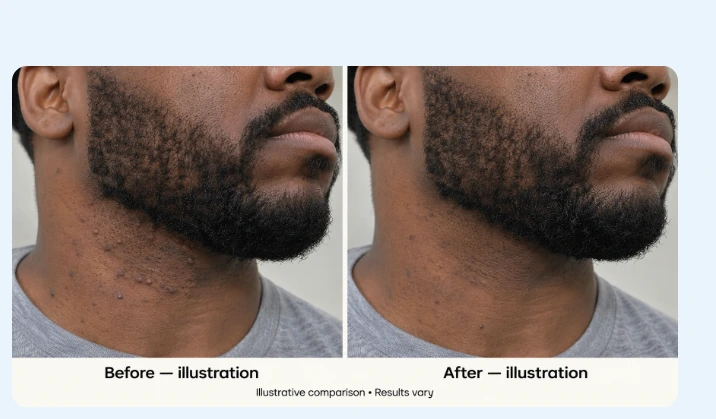
Pseudofolliculitis barbae (PFB)
Why the Front Neck?
Beard hairs can grow in several directions under the jaw. Shaving close in this area can make it easier for cut hairs to grow back into the skin.
Why the Front Neck?
Beard hairs can grow in several directions under the jaw. Shaving close in this area can make it easier for cut hairs to grow back into the skin.
Why the Cause Matters
Painful, spreading or pus-filled bumps deserve medical assessment. A GP or dermatologist can help identify the cause and advise on care.
What We Discuss at Your Consultation
Your shaving routine, previous flare-ups, skin and hair characteristics, and the exact beard line you want to keep.
Razor Bumps at a Glance
What You May Notice
Raised bumps, itching or tenderness after shaving. Some bumps leave dark marks as they settle.
Common Triggers
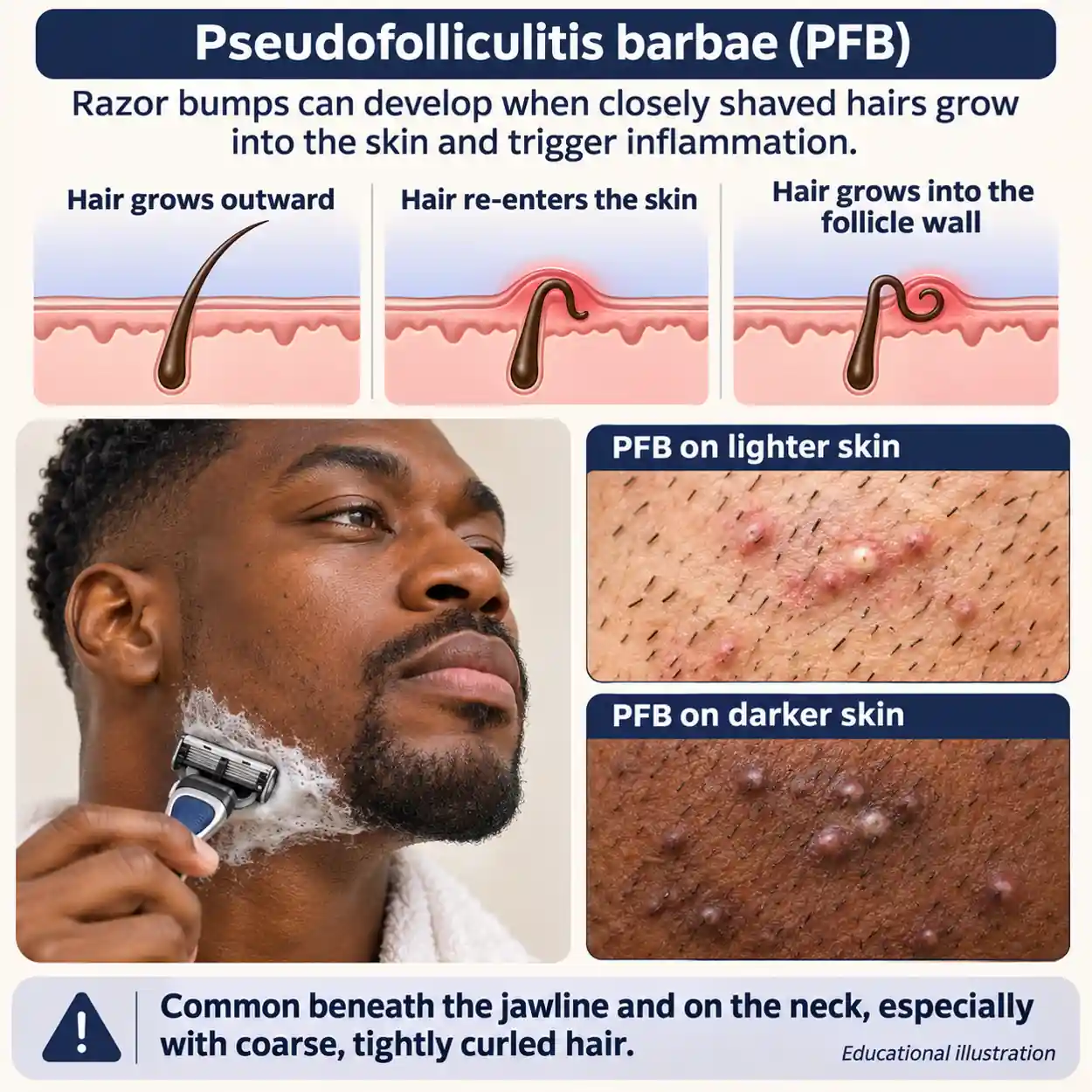
Close shaving can leave short hairs that curl back into the skin. Coarse, tightly curled beard hair is especially prone to ingrowing.
Common Areas
Under the jaw, along the beard line and on the front of the neck. Ingrown hairs can also occur elsewhere after hair removal.
Understanding Ingrown Hairs and Razor Bumps
When a closely shaved hair grows back into the surrounding skin, it can trigger inflammation around the follicle. Repeated flares can leave lingering dark marks and sometimes scars.
PFB and folliculitis barbae can look similar. PFB is an inflammatory reaction to ingrown hairs. Folliculitis barbae commonly involves a follicle infection and may need medical treatment. The two can occur together.
Why the Cause Matters
Painful, spreading or pus-filled bumps deserve medical assessment. A GP or dermatologist can help identify the cause and advise on care.
When to Seek Medical Advice
If bumps are painful, spreading, producing pus, recurrent or leaving scars, speak to a GP or dermatologist. Laser hair removal is not a substitute for diagnosing or treating an active infection.
Could Laser Hair Reduction Help?
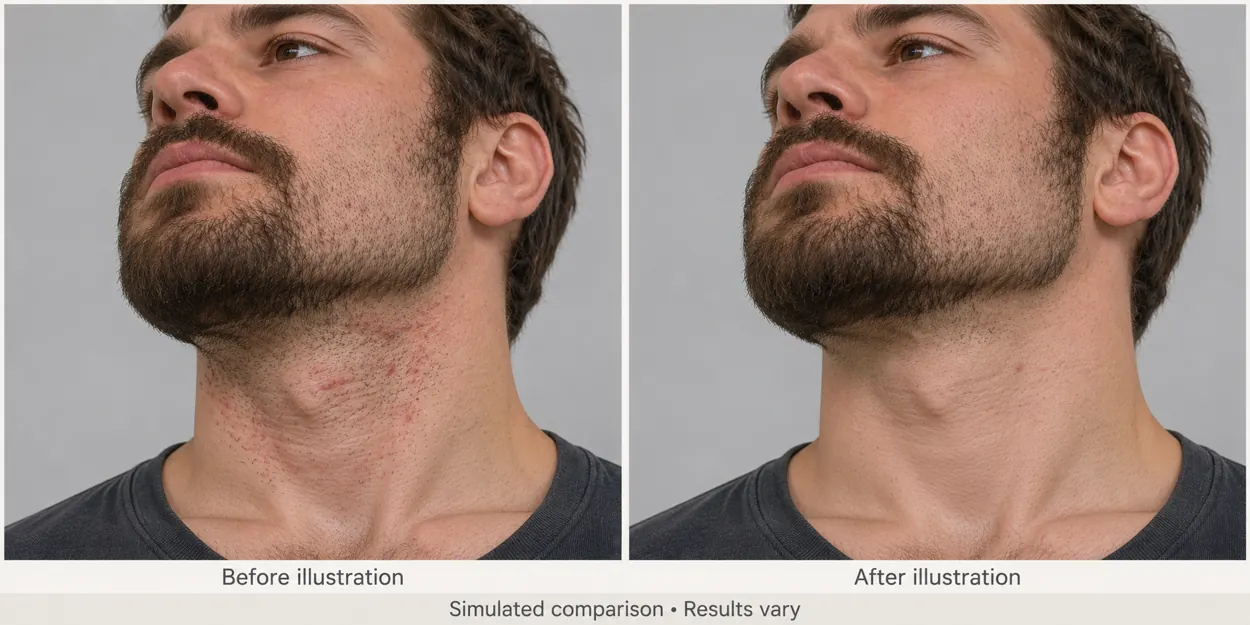
For suitable clients, laser hair reduction can reduce the amount of hair growing in the selected area. With fewer hairs and less need for close shaving, there may be fewer opportunities for new ingrown hairs to form. We can discuss treating the front of the neck while preserving your chosen beard outline.
At Laser Perfect we assess your skin tone, hair and treatment area, then carry out a patch test where appropriate using the Candela GentleMax Pro Plus. A course is usually needed, results vary and maintenance may be required. Pigment changes and irritation are possible, so suitability and settings matter.
Explore our laser beard shaping service for more about defining the neckline.
What We Discuss at Your Consultation
Your shaving routine, previous flare-ups, skin and hair characteristics, and the exact beard line you want to keep.
Aftercare for the Beard Line and Neck
When can I shave or trim the treated area again?
At Laser Perfect, we advise avoiding shaving or trimming the treated area for two weeks after your laser session. Treated hairs may begin to shed around 10–14 days after treatment. If you need to tidy your beard, trim only the surrounding, untreated hair and keep the trimmer away from the treated skin and any raised or irritated bumps. After two weeks, resume shaving once the skin has settled.
What should I avoid while the skin settles?
Avoid rubbing, scratching or picking the treated skin. Let treated hairs shed naturally. Follow your practitioner’s guidance on exercise, swimming, saunas, hot showers, fragranced products, sun exposure and when to apply sunscreen.
Gentler Shaving Habits
If possible, take a break from close shaving while the skin settles. When you shave, go in the direction of hair growth and avoid stretching the skin or making repeated passes. A trimmer that leaves a little stubble may help. Avoid picking or digging out ingrown hairs.
Frequently Asked Questions
No. Bacterial folliculitis may need medical treatment. Cosmetic laser is considered only after appropriate assessment and when the skin is suitable.
Razor bumps often arise when hairs grow back into the skin after shaving, causing an inflammatory reaction.
Potentially, with an appropriate wavelength and experienced practitioner. Suitability and risks must be assessed individually.
Visit Laser Perfect in Ilford
Book a free consultation to discuss recurring beard-line or front-neck ingrown hairs and find out whether laser hair reduction may suit your skin and hair.
465 Cranbrook Road, Gants Hill, Ilford IG2 6EW. Approximately 3–5 minutes’ walk from Gants Hill Underground Station.
Clinical reading: DermNet on pseudofolliculitis barbae and British Association of Dermatologists on pseudofolliculitis.